
Scalp micropigmentation
We are internationally renowned specialists in hair micropigmentation based in Marbella.
Scalp micropigmentation
Scalp micropigmentation (hair tattooing) is the latest non-surgical solution against male and female hair loss; an incredible treatment where natural pigments are applied to the epidermal level of the scalp to replicate the natural appearance of real hair follicles, depending on the extent of hair loss and the desired look.
Our method is considered the best treatment of its kind available in the world today, using only natural pigments and the latest advances.
The treatment adapts perfectly to every skin tone and our clients don't have to worry about hair loss.
Scalp micropigmentation is rapidly gaining recognition as a leading solution for hair loss. Most people desire a full head of hair, and that's precisely what we offer: an affordable, non-surgical hair loss treatment called scalp micropigmentation.
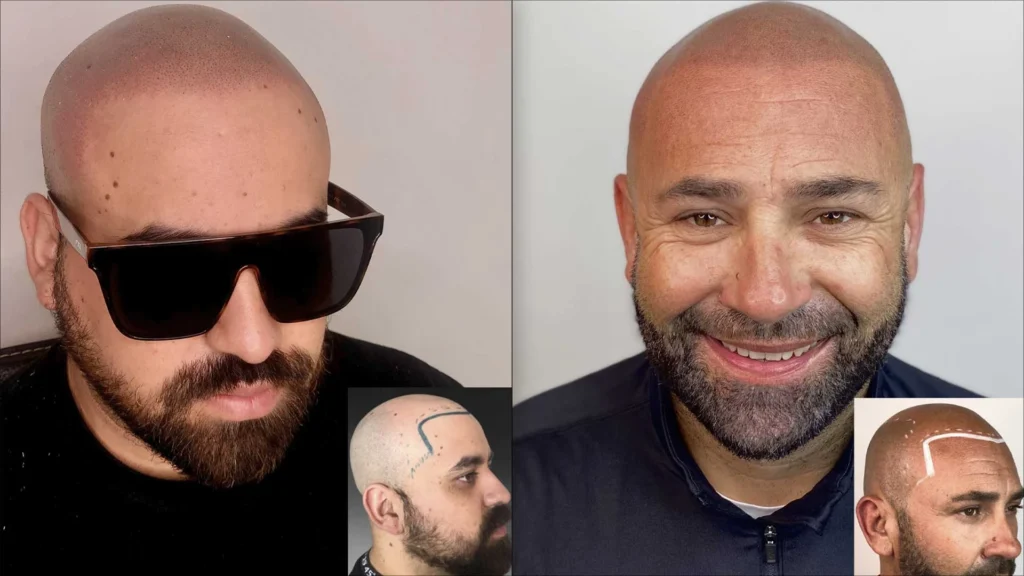
What are the effects of this permanent makeup?
Discover why scalp micropigmentation at Clínica Premium is the best solution if you suffer from any type of hair loss, available in Marbella.
Scalp micropigmentation achieves:
Achieve a shaved look effect, creating a more youthful appearance.
Restore the hairline in partially or totally bald heads.
Permanent camouflage of any alopecia process.
The camouflage of scars resulting from a previous hair transplant surgery.
Hide scars, burns, and birthmarks.
Enhance the visual effect of the hair transplant.
Scalp micropigmentation for baldness in the crown area
Baldness at the crown is one of the most common types of alopecia, or degenerative hair loss, which generally makes one look older and affects self-confidence. Our treatment will immediately rejuvenate the appearance of the crown, creating a completely realistic hairline thanks to the replenishment treatment, ideal for translucent and very fine hair in the process of baldness.
Scalp micropigmentation to combat receding hairlines
Bald men generally agree that baldness is a nuisance, but they rarely agree that it's worse: a bald crown or receding hairline. This debate is no longer necessary thanks to scalp micropigmentation. Scalp micropigmentation allows for the camouflage of any area being treated, achieving a natural hairline with volume and a shaved-in effect.
Scalp Micropigmentation against Partial or Total Hair Loss
Micropigmentation is often the ideal solution for advanced hair loss. We are proud to be part of the solution and to have restored self-esteem to thousands of patients of all ages. We also love it when people refer to scalp micropigmentation as "sudden hair growth"!
Scalp micropigmentation is reversible with a touch-up.
As we age, we tend to change our hairstyle and appearance. Laser hair removal can achieve a completely different look, shape, and color, or a subtle change to align with current trends. As a last resort, the treatment is reversible using laser technology. Changes can include: altering the hairline position, raising the frontal hairline to create a less youthful appearance with a receding hairline, changing the sides and sideburns, and altering the hairline shape. While we haven't received any requests for reversal treatments to date, it's reassuring to know that complete reversal is an option, albeit unlikely. All these changes are achieved through laser application. The pigment used in this method penetrates much less deeply than a tattoo, making laser removal a much simpler and painless procedure that typically requires only one or two sessions.
Micropigmentation against Alopecia
Many people suffer from alopecia and turn to us to restore their hairline. Alopecia can vary severely from person to person, but the highly specific and flexible process offered by scalp micropigmentation allows many patients with alopecia to regain their self-esteem.
Female Micropigmentation
Nearly 51% of women suffer from hair loss, thinning, or weak hair. The same treatment is performed on women with either short or long hair. Even with long hair, the micropigmented areas will be much less noticeable compared to the previous state with areas of exposed scalp.
Scalp micropigmentation in areas with low hair density
Hair loss can affect both sexes at any age. A family history of alopecia, aging, stress, an unbalanced diet, hormonal changes, or menopause can be the cause. And although hair loss is not as complete as in men, women can be affected, even in their social relationships and experiencing low self-esteem. With Scalp Micropigmentation “Redensification Effect,” women with some degree of alopecia (just like men) have found a solution to the problem. Once the area with thinning hair is camouflaged, they regain confidence and a more satisfactory appearance.
Skin Type and Color
Scalp micropigmentation is suitable for all skin types and colors: white, Afro-Caribbean, Latin, Asian, and mixed-race. Our innovative technology matches the hair follicle color to provide a perfect and invisible blend with any existing hair.
Frequently Asked Questions
When can I start the process?
We believe this is a very important decision in your life. While we are confident you will love the results, we strongly recommend a reflection period of at least 24 hours between the consultation and the treatment to allow you time to process the idea and prepare for the change.
How long should I wait before starting the first treatment session?
As surprising as it may seem, the human head has approximately 2,000 hair follicles per 6 cm². It's no wonder, then, that a minimum of three sessions are required to achieve the desired final appearance on a mostly bald head. Following our diligent, results-oriented methods, a lighter pigment will be applied during the first treatment session. The second session will allow us to fine-tune the shade and achieve the ideal combination (sometimes using three to four pigment shades for the perfect result) while adding density and the crucial blend of trigopigmentation to create a natural-looking hairline. The focus of subsequent sessions is on completing the final look by adding details and matching the pigmentation to the hair color.
What qualifications do the specialists possess?
All our professional experts have completed the advanced program and all training requirements in hair micropigmentation, in addition to possessing medical insurance and accredited qualifications to practice.
How will I look after the treatment?
The results are visible immediately after the first session, and you will also experience some redness of the scalp for one or two days. The pigment tone will appear slightly darker than the final result after four weeks, before the pigments soften and give a natural look. All our treatments include three sessions, as shown in the images below. Improvement is visible from the moment the first session is completed. This improvement continues with each subsequent session, as the design, density, and desired tone are adjusted.
Will my head look natural after scalp micropigmentation?
Our clients tell us that even when they look in the mirror, or when people close to them look at them, they can't tell the difference where the natural hair ends and the micropigmentation begins.
What is the total duration of the procedure?
The pigment will gradually fade over the first 4 weeks until the desired tone is achieved.
How long will the effects of scalp micropigmentation last?
To maintain the look, we recommend touch-up treatments at least once every 3-6 years to prevent fading. Scalp micropigmentation can last a lifetime with proper care and sun protection, as sunburn can damage the results.
Can scalp micropigmentation conceal hair transplant scars?
Yes, it's an excellent alternative for camouflaging all types of scars, as well as the after-effects of FUT/FUE grafts, and allowing you to wear your hair as short as you want.
Is there any kind of guarantee?
Yes, we are proud to offer all our clients a 12-month guarantee on the entire treatment, starting from the first session. If any area isn't perfect, simply contact us for a complimentary follow-up session. An hourly rate will apply for any design or color changes.
I'm worried about how to design the front line…
We will first use a wax pencil to design the hairline, carefully defining the desired effect. Other clients seek a softer, more irregular result, a more mature style, or even a receding hairline.
Is the micropigmentation technique painful?
No, this technique cannot be described as painful at all, although it may be somewhat uncomfortable. Using a pain scale (see below), the pain level is generally rated between 1 and 3.
- 0 Painless
- 1-3 Mild Pain
- 4-6 Moderate Pain
- 7-10 Intense Pain
I prefer to avoid pain. Can I take painkillers?
If you wish to minimize pain, we recommend taking paracetamol and/or ibuprofen one hour before the session.
Will the pain continue after the session ends?
Fortunately, no. The discomfort is barely noticeable during the medical tattooing process and is considered a nuisance rather than pain. Therefore, you can resume your normal activities after the session.
What size is the needle?
We work with single-use needles. It's a 3-point micro steel needle system, specially developed for us.
How often will I be able to shave?
Most of our clients want a 'shaved' look, so they shave every 2-3 days, saving themselves a fortune at barbershops! So letting their hair grow out would give away their secret.
What happens if I need to change the dates?
No problem, if for any reason you need to change the dates, just let us know as soon as possible and we'll arrange a new appointment, provided you give us 48 hours' notice. In case of cancellation within 48 hours of the appointment, a late cancellation fee will be charged.
What happens with continuous hair loss?
Our methods blend carefully and with decreasing intensity on your remaining hair, significantly minimizing future hair loss. The treatment can be combined for a fuller look. And because touch-ups require less work for us, they'll also cost you much less.
What if I want to change my appearance or even reverse the process?
We have never had a client request to reverse the process so far, but the removal process would be similar to that of a tattoo, with the exception that scalp micropigmentation is only located within the second layer of the dermal skin compared to a conventional tattoo which is almost twice as deep.
A complete reversal can easily be achieved with laser treatment in two sessions. If you simply want to change your appearance, perhaps soften your hairline or even slightly recede it as you age, it's possible to smooth your frontal hairline in just 20 minutes of laser treatment.
How much does a touch-up session cost?
It's not common for clients to return before 3-6 years have passed, but if you notice you need a touch-up, a change of style, or a change in tone, an hourly fee will be charged. A touch-up session typically lasts 1 hour, sometimes 2, depending on the size of the area requiring treatment.