
CT scan [Axial Tomography]
64-cut computerized
In our Diagnostic Imaging Unit, we integrate cutting-edge technology with expert medical interpretation to offer fast, accurate, and safe diagnoses.
Diagnostic Imaging Unit
We have CT [64-slice Computed Tomography], which together with the Conventional Radiology and the Ultrasound, It allows us to study in detail everything from musculoskeletal injuries to complex abdominal, urological, thoracic or neurological pathologies.
We work in direct coordination with our specialists to accelerate diagnosis and facilitate immediate clinical decisions, both in outpatients and inpatients.
Because behind every image there is a person, our team of professionals not only interprets images, but also assesses the clinical context and offers clear and useful information to resolve each case.
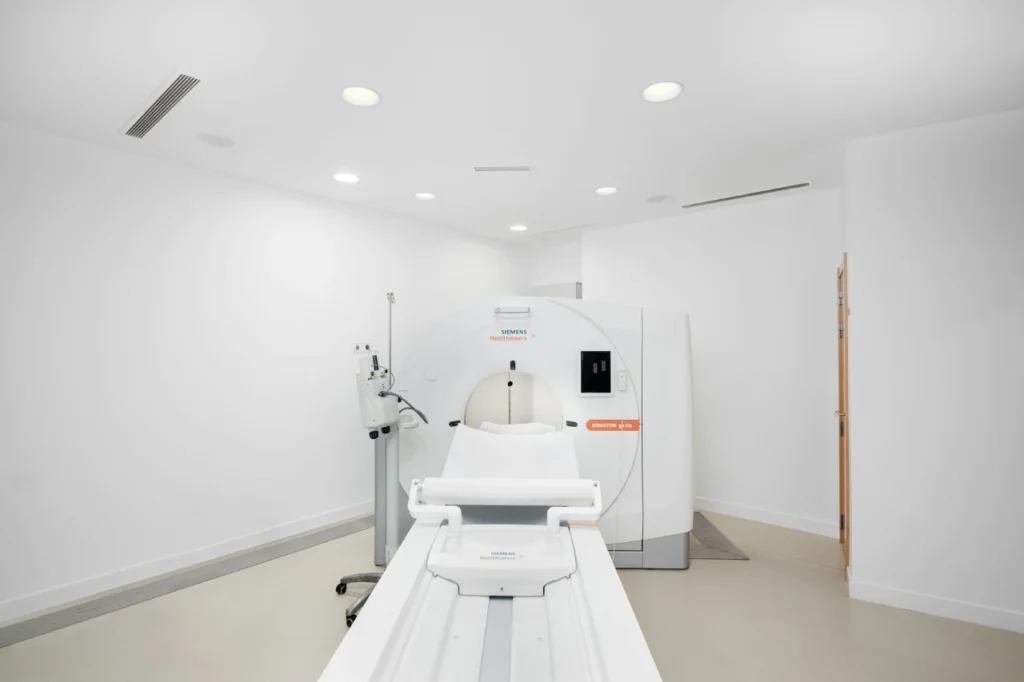
CT [64-slice Computed Tomography]
At Clínica Premium, we offer the most advanced diagnostic techniques, such as computed tomography (CT) scans, which use specialized X-ray and computer equipment to create detailed images of internal body structures. This is used for diagnostic and medical evaluation purposes to obtain information about soft tissues, bones, and internal organs.
CT is an advanced technique that provides detailed images of the body in millimeter slices, essential for studying the brain, neck, chest, abdomen, pelvis, spine or joints with maximum precision.
We have a state-of-the-art multislice scanner and rapid scanning protocols that minimize radiation exposure without compromising diagnostic quality. Our radiologists interpret the studies, collaborating closely with the rest of the medical team to expedite complex or urgent diagnoses.
The most common uses of computed tomography include:
- Diagnosis of injuries and diseases: tumors, cysts, infections, inflammations, hemorrhages and other abnormalities.
- Bone densitometry: This is commonly used to diagnose osteoporosis, a disease in which bones become fragile and prone to fractures. Bone mineral density measurement: Bone densitometry is usually performed on the spine, hip, or forearm.
- Assessment of traumatic injuries: such as bone fractures, internal bleeding, and damage to internal organs after an accident or injury.
- Cardiovascular disease assessment: CT angiography is used to evaluate the body's arteries and veins, including the coronary arteries.
- Evaluation of lung diseases: Chest CT is used to diagnose and evaluate lung diseases, such as lung cancer, pulmonary embolism, infections, and interstitial diseases.
- Study of diseases of the nervous system: CT scans are used to evaluate the brain and spinal cord for tumors, hemorrhages, traumatic injuries, and other neurological conditions.
What does a CT scan [64-slice Computed Tomography] involve?
It is a diagnostic imaging test that provides detailed images of organs, tissues, and bones. It is used to detect injuries, diseases, tumors, hemorrhages, pulmonary and neurological pathologies, as well as to plan medical and surgical treatments.
- What does it consist of? It is a diagnostic imaging test that uses X-rays and a computer to obtain detailed images of the inside of the body: organs, tissues, and bones.
- Why is it done? It is used to detect tumors, infections, hemorrhages, fractures, lung or neurological diseases, and to plan treatments or surgeries.
- Prior preparation: In some cases, fasting or the administration of a contrast agent may be required. Medical staff will inform you beforehand if this is necessary.
- What does it feel like during the exam? It's a simple and painless test. The patient remains lying down while the equipment takes the images. You just need to stay still.
- Meaning of abnormal results: They may indicate the presence of diseases or problems that will require specific medical evaluation.
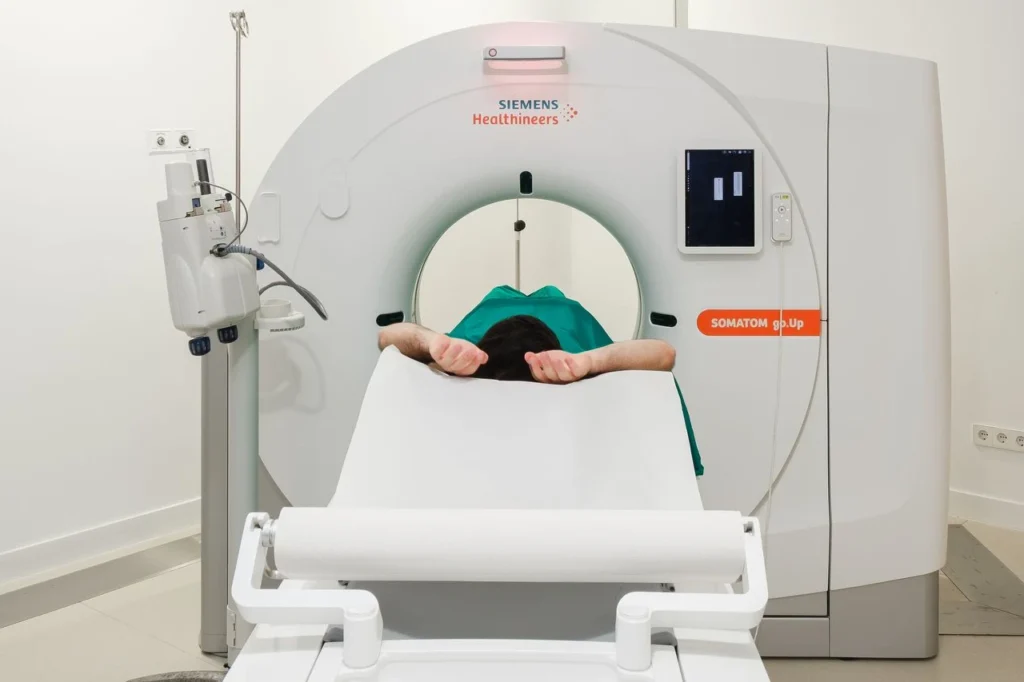
Our computed tomography (CT) scanner provides real-time images with high precision; it has certain protocols and technical specifications such as:
- Calcium score to prevent heart attacks.
- 3D reconstructions that facilitate visualization during surgery.
- Dual-energy CT scan that allows us to know what material kidney stones or calculi are made of.
- Special pediatric clinical protocols with a wide range of settings, where X-ray exposure is adapted to the weight and age of the child (and small adults), substantially reducing the patient's effective dose.
Agreements with companies:




TAC - €200
CONTRAST - €80
With Premium Card Discount of 40% – Not applicable to contrast, only to CT scans